
How to Carry the Presence of God Like David Carried the Ark
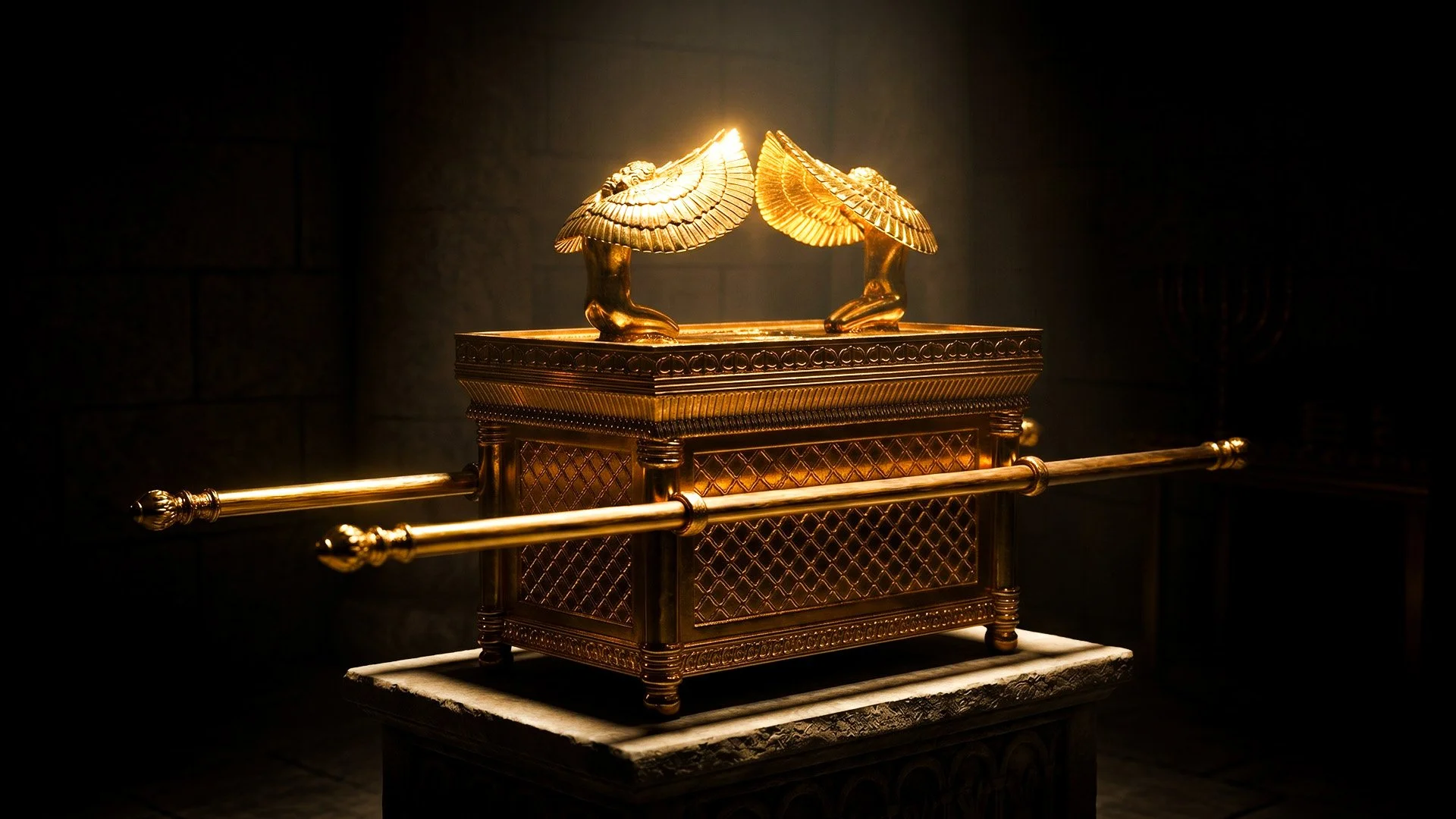
The Ark of God, spoken about in the Bible, was a vessel God told Moses to build.
He wanted an ark that He could dwell in—at least, His presence, for God cannot be confined to a man-made box of wood. So God gave Moses the dimensions: three and a half feet long two and half feet high. It was to have four rings on the top so two poles could be held by the Lord’s priests as they carried the Ark. It was made out of acacia wood and then completely covered with gold. Sitting on the Ark’s lid, which was made of solid gold, were two solid gold angels, bent over, with their wings touching near the middle.
The lid of the Ark was called the Mercy Seat. After having Moses build the ark, God gave Moses a tabernacle concept; there was an outer court with no roof. There was a laver and a rosin altar. The laver was a big bowl of water for cleansing. The rosin was a bronze altar for sacrifice.
Another compartment in the temple was for the priest, called the Holy Place. It had a roof, and it was concealed. Inside were the golden candlesticks, the table of showbread, and the altar of incense. This was part of the temple or tabernacle that required daily maintenance. The only light was candlelight. Then beyond there was a curtain.
Beyond the curtain was a place called the Holy of Holies. Only one thing could reside there— the Ark of the Covenant that Moses had built by the design of God.
I say all of this to show how important David’s actions were. He was bringing back to Jerusalem the presence of God—the Ark—and was going to put it back into the Holy of Holies, blessing the nation he had just reunited. The Ark contained the Ten Commandments, a pot of manna, and Aaron’s rod that budded. This would go into the place where no one could enter, no one could see, and no one could touch except the high priest, one day a year, on the day of atonement. During that day, the high priest would sprinkle blood on the Ark, atoning for the sins of Israel, postponing judgment until Christ came.
The Ark, the tabernacle, the sacrifices, the altars, the priests, all of it set Israel apart. All of it made it possible for the Lord of lords and the Kings of kings to reside with His people, His nation, those He had chosen out of all the other nations on earth. What David was doing was a very, very holy thing. He was restoring the primary function of the Ark: God’s manifest presence in Israel. This was very significant to Israel.
What led to the Ark vanishing from the nation? Often Israel tried to use the Ark in moments of battle and God was faithful. But over time, God got tired of being used by backslidden people, and during one fight against the Philistines, God’s presence didn’t come. And they lost the battle.
The Philistines conquered them, entered the nation, killed the priests of God, and Hophni and Phineas took the Ark out of the temple.
They took it into Philistria. A great historical companion to the Bible, called the Chaldean paraphrase, says it was Goliath himself who boasted that he killed the priests, and he lifted up this Ark, and carried it back to Philistia by himself. They brought the Ark out of Israel into the land of the Philistines, and once there, all hell broke out wherever the Ark went.
Let me make a side note here: I want you to stop worrying about the last days because the devil can’t mess with anointed people; the devil can’t mess with God. What happened in Philistia with the presence of God in its midst proves this point (see 1 Samuel chap-ter 5). The Ark was placed in the temple of Dagon where they had an ashtray and an altar to Baal, or Beelzebub, their deity. They decided to put the ash-tray in the Ark of God in that temple to signify their god conquered Israel’s God. The next day when they opened the door and the priest entered in, they saw the massive stone statue of the deity had fallen over. The priests gathered around and had workers prop it back up. Listen, any god you have to prop up is not worth worshiping!
Then the next morning after that, they opened the door and Dagon had fallen again onto the ground. But this time his head had been severed and both arms cut off. All that was left of the statue was a torso. The priests knew that some spiritual power greater than theirs was messing with their god. So they shuttled the Ark from city to city, throughout the land of Philistia. Everywhere it went, massive calamity struck: pestilence, people dying gross deaths, and more. For seven months the Ark was in enemy hands. The Philistines finally decided to build a new cart and put the Ark on the new cart and then send it away. They found two cows that had never pulled a cart before, nursing cows with young calves, and they put the Ark on a road. When the cows came to a fork in the road, one fork led back to the land of the Philistines and one road led to Israel. They conjectured that if the cows went toward Israel, against their nature, they would know that God sent the pestilence on Philistine and would send it back to Israel. They put the Ark and cart there at the fork of the road. The cows went lowing as the presence of God overcame their natural instincts.
The Ark returns to Israel, and they’re excited.
But Israel mishandles it and they don’t know what to do. So, they put it in the house of Abinadab for 70 years (see 1 Samuel chapter 7). The Ark of the Covenant, the place of God’s presence, is in a guy’s barn. It’s not because it wasn’t treated right; it’s not respected. The presence of God is hidden even though it’s with them.
Then David becomes king. He says that the first item on the agenda is to get the presence of God back in the land. The first things we must do individually and corporately is to get the presence of the Lord back in our midst. We must not be offended when He comes either.
I would say my church is a presence-driven church. We make the congregation stand for 50 minutes during worship. No other big church in Phoenix does that. I don’t care what other churches do—let them have their 12-minute services. We don’t have service for people, we have service for God. In my church, we are presence-driven.
Once we decide to bring the presence back, we must be careful not to make the mistake David made. David says, “Let’s put the Ark on a new cart.” Sounds reasonable. David didn’t know his history; he didn’t know the biblical pattern. Like David, we’ve adopted a worldly method to accomplish a Kingdom purpose. The problem is this: no matter how good your intentions, God won’t bless them when they’re done the wrong way. The temptation in a presence-less church is to build new carts.
David and company had no familiarity with the pattern of the presence. So they built a new cart. The oxen pulling the cart with the Ark stumbled, and one of the men touched the Ark and died. David is confused. He’s hurt. He’s offended, I suppose. He’s angry at God (2 Samuel 6:3-7). How could this happen? How could I do the right thing and have a wrong result? he must have thought.
This tragedy forces David back to the Word of God. He reads the Scriptures and discovers that the Ark had to be carried on the shoulders of four Levites—Levitical priests—and that every six steps there had to be a sacrifice. He has now figured out how to handle the presence correctly, according to God’s standards.
With the truth in hand, David returns to Obed-Edom’s house and finds Obed-Edon’s house hyper-blessed. His stocks are up. His cattle are breeding. His crops are healthy. His kids are doing well. Everything he has is blessed beyond measure because the Ark is there. It had been there three months and blessings are raining down on him. This man and his family are a billboard of God’s goodness. This is a sign to others what the presence of Jesus will do in your life.
Then, one day, there’s a knock on Obed-Edom’s door, and King David is standing there. He wants the Ark. The truth of the goodness of God’s presence was on full display in this man’s life and David wanted it for the country.
This encounter with God must have changed Obed-Edom forever. For we see in 1 Chronicles 16, that Obed-Edom becomes a keeper of the Ark in the tabernacle of David. I’m surmising that he became so addicted to God’s power, blessing, and life that he couldn’t leave Him.
To bring the Ark back, sacrifice was required. Everywhere in the Old Testament, wherever God dwelt, He could not dwell in unregenerate man. So, priests had to sacrifice constantly to keep atoning for sin. Jesus came to be that Sacrifice, once and for all.
Now, because of Jesus, God doesn’t live in a box. He doesn’t live in a room. His Presence is every-where, but now He primarily dwells in the regenerated spirits of born-again people. He dwells in believers: Don’t you know that you are the temple of the Holy Spirit and that the Spirit of God dwells in you (see 1 Corinthians 6:19-20). All of us are carriers of every part of the nature of God. God wants us to carry and steward His presence so beautifully that it brings people to Christ.
So as carriers of His presence, let’s stop pleading with God to send us to a better place, or better job, or better church. Instead, let’s except the heavenly assignment and make the place we’re in now better. The anointing we’re carrying can change everything every place we go. All of us have the opportunity to carry as much glory of the presence as we desire.
Stop begging God to change your circumstances. You might work with the most horrible sinners in the world. What you carry into work will change everything if you recognize it and cooperate with God. The Church in this moment in history has to stop playing defense against an aggressive, sinful culture. It’s time to go on the offense because they’re carrying nonsense and demons into every segment of culture and releasing their wickedness. We are carrying Heaven and glory—we need to show them the contrast between these two worlds.
Now a word of warning: people will become hateful toward you because of the joy and peace you exhibit. Friend, even though you have done nothing to offend them, they will suddenly become hostile toward you. Why? The anointing in you irritates the demons in their lives or their flesh. When that hap-pens, you know you’re doing something right!
David experienced this. In our 2 Samuel Scripture, he’s dancing and whirling and leaping for joy. God’s coming back to Israel! David is excited and strips off his royal clothes and humbles himself in worship before God. When we worship God, there are no crowns, no titles, no positions. Can you imagine being the king of a nation and the best worshiper in the nation at the same time?
Daivid is worshiping, and his wife, whom he married after he killed Goliath, Michal Saul’s daughter, is watching him. She judges him from her high place of religious judgment. She thinks her husband is acting like a clown.
When he comes into the house, she says in essence, “How dare you behave like that! You were so undignified!”
David’s response, in today’s language, is classic and strong: “You think that’s bad? Wait till you see me tomorrow! I’ll be even more undignified because my worship ain’t for you—it’s for Him!”
What became of Michal? For the rest of her life, David never slept with her. She died childless by David’s choice. She became barren by being critical. Never criticize someone’s passion for God just because it’s beyond your limits.
So now David has the ark; it’s back where it belongs. In the Bible there are three things pointed out to us. First, they brought back the Ark with gladness. The Church must not descend into a constantly sorrowful assembly. We all see the behavior of the culture, but we must focus on the wonders of God more. As we do, we will be filled with joy. And that joy will be contagious. It spreads like a wildfire.
Second, they used the sound of trumpets to announce the return. In ancient times, when the ruler returned to his city, it was announced with trumpets. The ruler of Heaven and earth was returning to His chosen people—trumpets were the only way to get the word out!
Then third, they brought the Ark back with shouting. The word used here in Hebrew is teruah. Teruah is not the shout you use to get kids off your lawn. (I’m joking.) Teruah is the shout of destiny that erupts in a person’s soul when they have a destiny encounter with God.
Teruah is used first in Joshua when they conquered Jericho and the walls came down. What a great shout went out! The second time it is used in conjunction with Jubilee—the time when all debts were forgiven and all lands returned. Every 50 years this was done to celebrate the Feast of Jubilee. Its intention was that every debt in Israel would be for-given so there would be no generational debt burden on families in antiquity. If a man died in debt, another person could claim his children to be his servants to pay off that debt—really tough stuff in those times.
So, God broke the pattern of lifelong debt by saying in the 50th year all debt is forgiven and, by the way, all lost properties are restored. When Jesus stood up to preach for the first time, He said that the Spirit of the Lord God was upon Him to preach the gospel to the poor and to announce the Year of Jubilee the acceptable year of the Lord. Jesus said God’s going to forgive all sin and wipe it away through His blood. (See Luke 4.)
The third time teruah was used is when in Ezra they laid the foundation of the temple after it had been completely destroyed. When the men of Israel saw their foundation restored, there was an eruption toward Heaven—a teruah went up. When an import-ant spiritual foundation is formed in your life, your spirit will leap with a shout to God.
When this last teruah happened, when the presence of God was restored to the people of God, a true shout went up once again. The sound of the last move of God is a great shout, because this sound signals that the King is with us, the Church, and has been beaten the enemy into silence.
The Church has been threatened into an intimidating silence. But no more. The Church is going to get its shout back.