
God has taken his place in the divine council; in the midst of the gods he holds judgment. —Psalm 82:1
Most Christians have never thought about this. We talk about heaven, we pray about kingdoms, we speak of principalities and powers—but do we really understand who inhabits those realms? The unseen world isn’t empty. It’s populated, organized, and actively at war. And understanding who’s involved in that cosmic conflict changes everything about how you pray.
Becca Greenwood, author of Discerning the Spirit Realm and a seasoned prophetic intercessor, was driving through New Orleans a few years back. As she drove past certain neighborhoods, she became acutely aware of a shift—not in the physical atmosphere, but in the spiritual one. What she felt was unmistakable: resignation, heaviness, a sense that some areas operated under a different kind of governance than others.
She wasn’t imagining it.
What Greenwood encountered that day is one of the oldest truths in Scripture: territorial assignment. The Bible teaches that evil powers are not randomly scattered across the earth like spiritual graffiti. They are hierarchically organized, geographically assigned, and strategically positioned—just as much as God’s loyal angels are. Some regions, some cities, some territories have a particular spiritual character because there is a spiritual governance over them.
This is not mysticism. This is biblical cosmology.
But here’s where most modern Christians lose the thread—we’re reading the Bible through a worldview the biblical writers never shared. Michael Heiser explains it this way: “The Bible wasn’t written to us, it was written for us. Its writers and its original readers just didn’t think like us.” The biblical writers wrote in a specific time, place, and culture—with a supernatural worldview most modern readers no longer share. The patterns of their thought, the way they assumed reality worked, the cosmic backdrop they took for granted—all of it is dramatically different from our default frame.
For them, the supernatural wasn’t a marginal belief—it was the assumed framework.
The question is: How do we make sense of this? What does Scripture actually teach about who lives in the unseen realm, and why does it matter?
Again, we need a framework for this.
The Divine Council and The Sons of God
To understand who inhabits the unseen realm, we must begin where the Bible begins: with God’s original council—the heavenly family He created before He made humans.
When Moses describes creation, he captures something the modern mind often misses. In Genesis 1:26, God says, “Let us make man in our image….” Christian tradition has long heard the Trinity in conversation here, and the Trinity is real—eternally, fully. These two readings aren’t actually competing claims about who God is. They’re different questions. One asks about God’s eternal triune nature; the other asks who else is in the scene at creation. The more natural reading of the Hebrew in its ancient context is that God isn’t speaking to Himself alone—He’s addressing the council He had already created, the divine assembly of heavenly beings called to inhabit His presence, carry out His assignments, and populate His kingdom. That reading is what makes sense of what comes next: Psalm 82, Daniel 10, Paul’s language about thrones and powers.
Michael Heiser’s recovery of this framework began with a single verse. A colleague in the Hebrew department opened his Bible to Psalm 82 and pointed: Elohim takes his stand in the midst of the Elohim. Same word. Twice. The second one had to be plural. Heiser had taught Bible for years and never seen it. That moment shifted everything. Divine council thinking—pushed to the margins for centuries—returned to the center where it belongs.
Here’s what that framework reveals: Heiser describes this heavenly assembly as “God’s original family and household, the divine council”—a structured, inhabited realm already in place before the creation of humanity, and whose order explains everything that goes wrong in Scripture.
Framework: The Divine Council Operates in Three Tiers
In the first tier is God Himself—Yahweh, the Creator, the Most High, who stands alone in eternal authority and glory.
In the second tier are the “sons of God.” The Hebrew term is bene ha-Elohim—literally “the sons of God.” These are members of God’s heavenly family-household, created as intelligent, powerful beings with the capacity to worship, to obey, and tragically, to rebel. In Old Testament passages such as Job 1:6, Job 2:1, and Job 38:7, these beings stand together before God, celebrate His works, and carry out His assignments across creation. When Moses tells Israel that God “allotted the nations to the sons of God,” he is describing an original cosmic distribution: God assigned territories to these heavenly family members, making them responsible for those regions.
In the third tier are the mal’akim—messengers, or what we call angels. They carry messages, guard sacred spaces, and execute God’s will. Throughout Scripture, they’re the workers in heaven’s kingdom.
These loyal messengers are not passive decorations in heaven’s court. The author of Hebrews makes their assignment clear: they are “ministering spirits sent out to serve for the sake of those who are to inherit salvation” (Hebrews 1:14). This is the baseline of legitimate angelic activity—service, not spectacle. Every genuine angelic encounter in Scripture follows this pattern: they show up for a mission, deliver it, and point back to God. They do not draw attention to themselves. That’s the pattern. Which means when a spiritual encounter centers on itself rather than pointing you somewhere, something is off.
This three-tiered structure is not incidental to the biblical worldview. It is the fundamental architecture that explains what goes wrong in Scripture.
Before we go any further, something needs to be said clearly: every being in that hierarchy—loyal or rebellious—was created through Christ and for Christ. Paul is explicit: “For by him all things were created, in heaven and on earth, visible and invisible, whether thrones or dominions or rulers or authorities—all things were created through him and for him” (Colossians 1:16). The powers that resist God are not His eternal equals. They are His creatures operating in rebellion against their own Creator. That distinction changes everything about how you pray.
Psalm 82 As The Watershed—When the Council Fractured
The framework is clean until we hit Psalm 82. And then everything changes.
Psalm 82 opens with a scene that should arrest every reader: God stands in the midst of His divine council. And He begins to judge the gods.
Read and listen to the opening verses:
God has taken his place in the divine council; in the midst of the gods he holds judgment. “How long will you judge unjustly and show partiality to the wicked?” (Psalm 82:1-2)
Wait. Gods? In the council?
Yes. And this requires an explanation that most of Western Christianity has lost.
Psalm 82 describes the moment when members of the divine council—beings assigned to govern regions and nations—used their authority not to point people toward God but to keep them enslaved in idolatry. They became elohim, functionally “gods” in the eyes of the people they governed, by drawing worship that belonged to the Most High alone. They perverted their assignment. They judged unjustly. They showed partiality. They upheld the wicked.
God’s response is categorical: He judges them for their unfaithfulness and removes them from their assignments.
This is the origin story for false gods.
The Old Testament is full of these territorial clashes, though we rarely read them that way. When God sends the plagues on Egypt, He is not merely disciplining Pharaoh. He is engaging in direct territorial warfare against the gods of Egypt—each plague targeted a specific deity, demonstrating Yahweh’s supremacy over the powers that had claimed that land. Exodus 12:12 makes it explicit: “…on all the gods of Egypt I will execute judgments: I am the Lord.” When Elijah faced the prophets of Baal on Mount Carmel, it was not a theological debate. It was a cosmic showdown between Yahweh and a territorial spirit that had claimed Israel’s allegiance. Baal is a thunder god—and there was no thunder. These are not poetic embellishments. They are territorial warfare in plain sight.
The gods of the nations are not myths. They are not demons conjured by human imagination. They are fallen members of the divine council—beings with real authority, real territory, and real rebellion against their Creator. When Paul writes to the Corinthians about “…so-called gods in heaven or on earth... yet for us there is one God, the Father…” (1 Corinthians 8:5-6), he is acknowledging that these rival powers are real. They just cannot claim ultimacy. Their authority is derivative, assigned, and judged.
Not every voice in church history reads Psalm 82 this way. Augustine of Hippo—the late-4th and early-5th-century bishop and theologian whose work shaped the Western Church for a millennium—argued that the “gods” being judged in Psalm 82 were human rulers: magistrates who had been given divine authority over their people and abused it. In his own words: “Far however be it from us to understand by these Gods…any creature in heaven or earth except men.” He was not alone in this reading.
But the weight of modern scholarship, anchored in the language of the Psalm itself and its parallels across the Old Testament, points toward heavenly beings. The structure of the text—God standing in the divine council, pronouncing sentence on beings who will “die like men”—makes far more sense if these are supernatural figures who should not die at all, not human judges who die naturally. Daniel 10 settles any remaining doubt: spiritual princes over nations are not a poetic device. They are real.
Test it against Scripture: After Psalm 82’s judgment, watch what happens in the biblical narrative. God doesn’t erase these fallen gods or remove them from the earth—not immediately. They remain, still governing territories, still drawing worship, still opposing God’s purposes. But now they do so as judged beings, stripped of legitimate authority, operating in defiance of a verdict they cannot overturn. They continue their rebellion not because they can win but because they refuse to submit.
The second heaven—the realm where these fallen rulers operate—is contested. It is a war zone.
Demons—The Disembodied Rebels
Not all of the unseen realm’s rebellious beings are territorial powers. Some are demons—fallen angels who have been judged and confined, awaiting their final sentence.
The distinction matters. A territorial spirit (or principality) is a member of the divine council who rejected God’s authority and now opposes God’s purposes in a specific geographic region. A demon, in the framework this article is building, is a disembodied spiritual being often associated with the “watcher” account of Genesis 6—judged so severely that it exists without a body, seeking embodiment or access to influence the material world.
Before we go further, it helps to know what kind of ground we’re standing on. Not everything in this section carries the same level of certainty, and honest readers deserve to know the difference.
Framework: Clear, Probable, and Debated
The framework is solid. The edges are contested. That’s honest—and it’s enough to build on.
Second Peter 2:4-5 gives us the clearest account:
For if God did not spare angels when they sinned, but cast them into hell [tartaros] and committed them to chains of gloomy darkness to be kept until the judgment; if he did not spare the ancient world, but preserved Noah, a herald of righteousness, with seven others, when he brought a flood upon the world of the ungodly.
The Greek word tartaros is intentional. It does not mean the ordinary place of the dead (hades). It describes the deepest, darkest pit of the underworld—a place of maximum confinement. These are not generic fallen angels. These are the offenders who committed the most egregious trespass against cosmic order: they abandoned their heavenly assignment entirely and materially incarnated, mating with human women and producing hybrid offspring called Nephilim. Rick Renner—pastor, author, and longtime minister to the former Soviet Union—explains in Fallen Angels, Giants, Monsters, and the World Before the Flood that the book of Jubilees, fragments of which were found among the Dead Sea Scrolls, fills in the backstory. According to this Second Temple Jewish text, the watchers were originally assigned by God with a legitimate cosmological role: to instruct the children of men and to do judgment and uprightness on the earth. Their role was authorized. Their descent was authorized. But during the time of Jared—the sixth generation from Adam—they abandoned that assignment entirely. They descended not as judges but as corruptors. They took human wives, taught forbidden knowledge (metallurgy, cosmetics, weaponry), and produced giant offspring. Their fall was not a passive rebellion—it was an active, material invasion of the created order.
Scholars of Second Temple Judaism have long recognized that this watcher tradition is not marginal speculation. George W.E. Nickelsburg, whose Hermeneia commentary is the standard scholarly reference on 1 Enoch, identifies 1 Enoch 14 as the bridge between the canonical throne-room visions of Isaiah, Ezekiel, and Daniel and the expanded heavenly imagination of later Jewish mysticism—his analysis shows the watcher literature was in deliberate conversation with Scripture, not inventing something alien to it.
Their confinement in tartaros means they cannot access the material world directly. So how do they operate?
This is where the distinction between containment levels matters. Not all fallen angels are confined to tartaros. Some operate in the second heaven. Some retain the ability to influence through deception, false doctrines, and counterfeit spiritual pathways. Their power is real, but it is bound—limited by God’s judgment and by the authority believers have in Christ.
Understanding demonology is not about fascination with evil. It is about clarity. Demons operate through deception, corruption, and counterfeit access. Knowing their assignment—their method, their location in the cosmological hierarchy, their actual limitations—gives the discerning believer the information needed to recognize and resist.
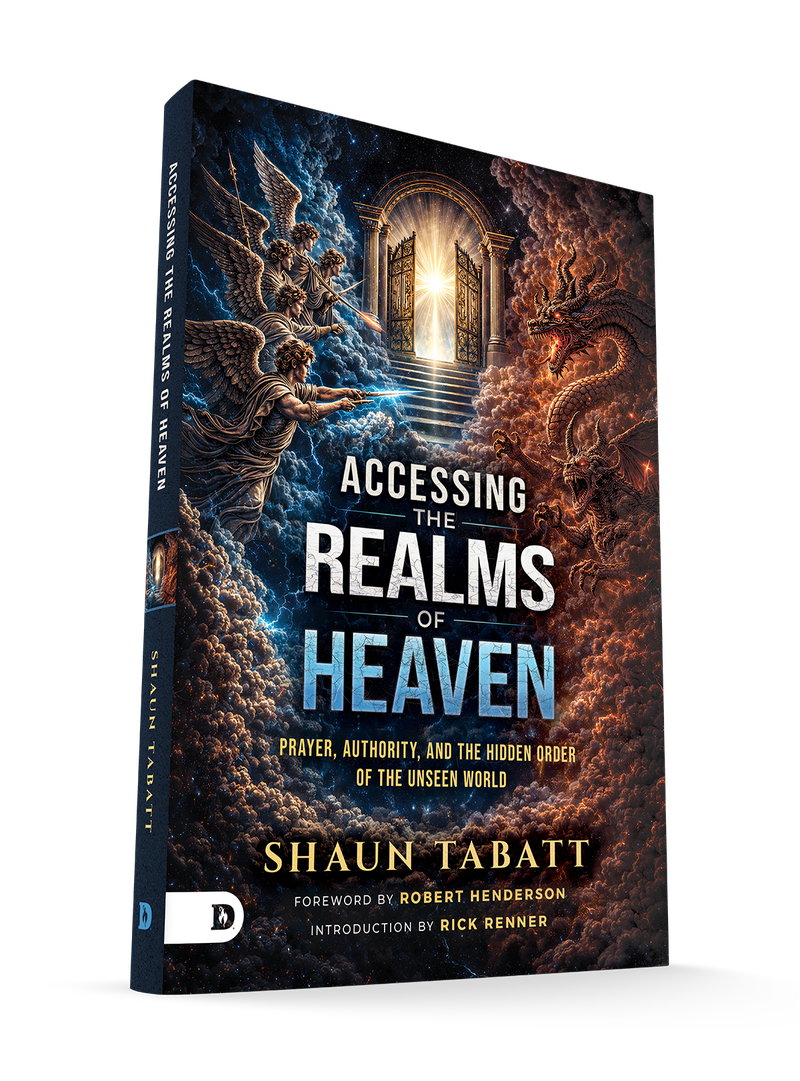
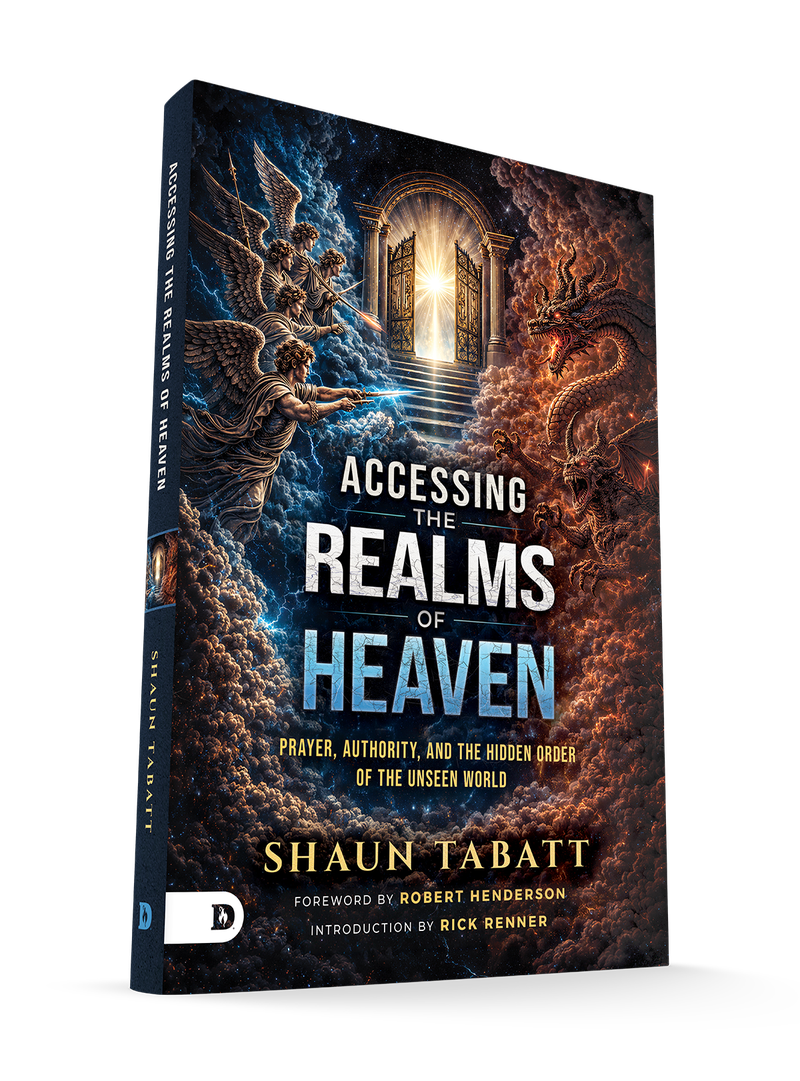
Step into confident, Scripture-grounded authority—and leave fear, confusion, and striving behind.
Have you ever wondered why some prayers seem delayed while others break through? Or questioned whether your spiritual experiences are truly from God?
You’re not alone—and you’re not meant to live in confusion.
In this powerful and deeply clarifying guide, bestselling author Shaun Tabatt reveals a truth many believers have missed: the unseen world is not chaotic—it is ordered, governed, and anchored in God’s authority.
Through years of research, ministry conversations, and personal experience shaped by grief and unanswered prayer, he shows you that prayer is not about striving upward, but learning to live from the place where God already reigns.
In Accessing the Realms of Heaven, you’ll discover how to:
Understand the biblical structure of the unseen realm
Discern God-led encounters vs. counterfeit experiences
Navigate dreams, visions, and spiritual impressions biblically
Recognize spiritual resistance without fear or obsession
Stand in your identity and authority in Christ
You are not called to strive for access—you are invited to rest in it! It’s time to stop praying from confusion and start living from heaven’s perspective.