
How to Defeat the Devil: Fight in the Spirit and Walk in God’s Authority
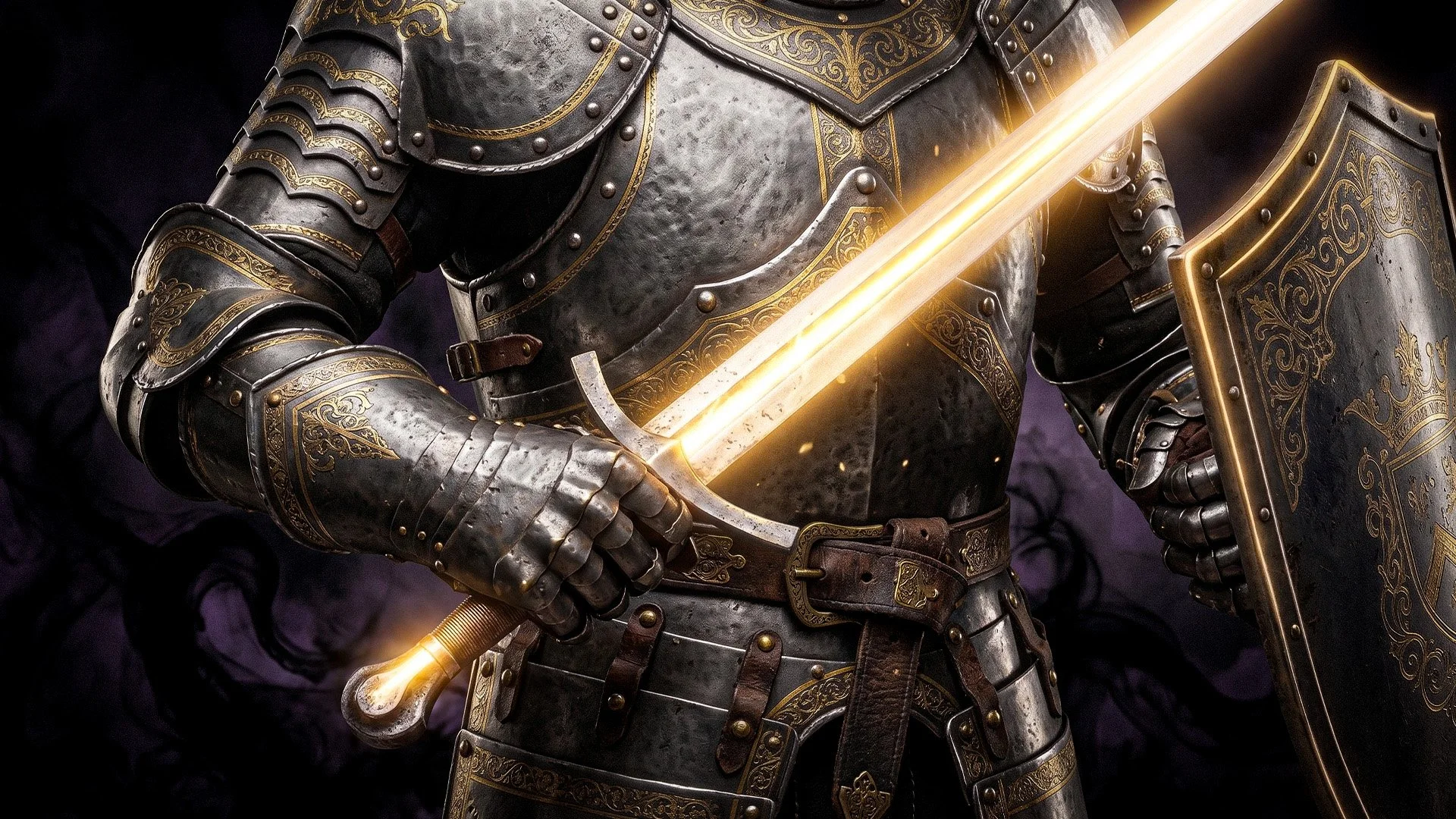
Spiritual warfare is not a fringe topic or a dramatic metaphor.
It is the daily reality of every believer whether we acknowledge it or not. The Christian life is not a cruise ship; it’s a battleship. And far too many in the body of Christ have been lulled into passivity, comfort, and numbness by a culture that tells them the war is not theirs to fight. But Scripture says otherwise. From Genesis to Revelation, the theme of conflict is constant—not just between people, but between kingdoms. There is a clash between light and darkness, truth and deception, holiness and rebellion. And every believer has been enlisted, not as a spectator, but as a soldier.
We are not called to be afraid, but we are called to be aware. The Bible tells us plainly in Ephesians 6:12 (KJV), “For we wrestle not against flesh and blood,” which means that if we’re always fighting people, politics, or policies, then we’re swinging at the wrong enemy. The real war is invisible, yet its effects are very visible. The discouragement you feel out of nowhere, the sudden division in a friendship, the mental fog that descends just when you’re about to step into obedience—all of it can be spiritual. Not everything is a demon, of course, but make no mistake: there are forces of darkness assigned to distract, derail, and destroy. And the sooner we stop pretending that this is a game, the sooner we can begin walking in the authority Jesus died to give us.
Operating in spiritual warfare is not about dramatics or formulas. It’s about alignment. It’s about living so rooted in God’s Word and filled with His Spirit that when the enemy comes in like a flood, you don’t run—you rise. It’s about understanding the authority you carry as a child of God. When Jesus gave the Great Commission, He didn’t just send His followers out—He gave them power. Power to cast out demons. Power to heal the sick. Power to trample serpents and scorpions.
But power unused is power wasted. And this is where many believers falter. We’ve been taught how to be nice, but not how to be dangerous. We know how to fit in, but not how to stand up. And meanwhile, the spirit of the age is raging, targeting our children, our churches, and our minds.
The enemy thrives on ignorance. He is a deceiver. A liar. A manipulator. And when believers don’t know who they are or how to fight, he gains ground. But when we recognize that we are in a war, and we begin to put on the full armor of God—not just as a memory verse, but as a lifestyle—every-thing begins to shift. We start seeing patterns for what they are. We discern attacks in the spirit before they manifest in the natural. We respond not with panic, but with prayer. And we stop reacting emotionally to things that must be addressed spiritually.
Spiritual warfare is not about yelling at the devil. It’s about being grounded in truth. The belt of truth, the breastplate of righteousness, the shield of faith—these are not accessories, they are survival. And more than that, they are our inheritance. We are not orphans fighting to survive. We are sons and daughters seated with Christ in heavenly places. That means we fight from victory, not for it. But that doesn’t mean we don’t fight. It means we fight with boldness, knowing that the gates of hell cannot prevail against the Church. Still, those gates won’t fall unless we push.
God is calling His people to sharpen their swords again—not literal ones, but the sword of the Spirit, which is the Word of God. Too many are being taken out by anxiety, addiction, offense, or apathy simply because they’ve stopped swinging. But the Word of God is not a motivational quote—it’s a weapon. And when it’s spoken in faith, prayed in the Spirit, and lived out in obedience, it breaks strongholds and silences lies. This is not about superstition, it’s about Scripture. It’s not about fear, it’s about fire.
We cannot afford to be casual anymore. The hour is too late. The battle is too intense. And the cost of passivity is too high. Spiritual warfare is not a once-in-a-while event—it’s a posture, a lifestyle, a lens. It means waking up every morning and saying, “I know who I am. I know whose I am. And I know what’s at stake.” It means guarding your mind, watching your words, praying in the Spirit, fasting with intentionality, and refusing to let the enemy have an inch of ground in your home, your family, your church, or your nation.
This is how the early Church lived—under pressure, under persecution, but never under fear. They knew they were in a war, and they fought accordingly. They didn’t wait for perfect conditions—they prayed, they preached, they fasted, they cast out demons, and they shook cities. And we are called to do the same. The same Spirit who raised Christ from the dead dwells in us. The same power is available to those who will take their stand, who will endure, and who will not bow to Babylon.
So rise up, warrior of God. Wipe the sleep from your eyes and the dust from your armor. This is not the time to be silent. It’s not the time to be safe. It’s the time to engage—to war in the Spirit, to resist the devil, to intercede for the lost, to break generational bondage, and to live with eyes fixed on eternity. The war is real, but so is the victory. And you were born for such a time as this.
Tongues, Why Bother?
In this generation, among all the gifts the Lord has made avail-able to His Church, perhaps none has been more misunderstood, maligned, or neglected than the gift of tongues. It is a supernatural gift, given by the Holy Spirit, not to divide the Church but to empower it. And yet, the very thing that was meant to build up believers has often become a point of controversy and confusion. The enemy has done a masterful job in sowing seeds of fear, suspicion, and even disdain toward something that the early Church considered normal, essential, and powerful. But the truth remains: speaking in tongues is not some bizarre ritual for the overly emotional. It is not a relic of a bygone age. It is a current, vital gift meant for every believer who desires to be strengthened, edified, and equipped to walk in the fullness of the Spirit.
Paul says plainly in 1 Corinthians 14:5 (NKJV), “I wish you all spoke with tongues….” That was not the suggestion of a fringe theologian. That was the Spirit of God speaking through an apostle who understood the power and purpose of this gift. When a believer prays in tongues, they are not speaking to people but to God. It bypasses the limitations of human language and lifts our spirit into direct communion with the Holy Spirit. As Paul wrote in Romans 8:26, we don’t always know how to pray as we ought, but the Spirit Himself intercedes for us with groanings too deep for words. Tongues are not just ecstatic speech. They are heavenly strategy. They are the Spirit of God praying the will of God through yielded vessels who are willing to be led beyond their own understanding.
The attack on tongues is not accidental. It is a calculated tactic of the enemy, because when believers are cut off from their spiritual language, they are often cut off from deeper levels of intimacy, authority, and discernment. Praying in tongues strengthens our inner self. It builds up our spirit. It makes the believer more sensitive to the leading of the Holy Spirit and less reactive to the noise of the flesh or the confusion of the world. And perhaps most importantly, it equips us for spiritual warfare. As Pastor Jack Hayford said so wisely, “Speaking in tongues is not a badge of spiritual superiority—it is a tool for spiritual survival.” It is not about elitism. It’s about empowerment.
Too many have dismissed this gift because they cannot fully understand it. But since when has God limited Himself to what our minds can grasp? Tongues are a language of the Spirit, not the intellect. They bypass our need to articulate and instead flow from the deep place where the Spirit of God resides within us. It is humility to admit that we need a language beyond our own. It is surrender to pray in a way that does not rely on our logic or eloquence. And it is obedience to embrace a gift the Lord has given—not just for personal edification, but for the building up of the Church.
In Acts 2, the Church was birthed with the sound of wind, fire, and tongues. This was not an afterthought. It was a declaration: the New Covenant people would be people of the Spirit. And that Spirit would give them new utterance, new power, and a new ability to declare the wonders of God. Tongues were not a side effect—they were a sign. They were a signal to the world that a new era had begun, one in which God’s people would no longer rely on flesh or intellect, but on the power of the Holy Spirit. And if that was true then, it is even more necessary now.
The Church today faces challenges that no human wisdom can solve. Cultural compromise, spiritual warfare, moral decay, deception in high places—none of these things will be overcome by clever arguments or human charisma. We need the supernatural. We need the fire. We need the gifts. And tongues are a vital part of that. When we pray in the Spirit, we are aligning ourselves with Heaven’s agenda. We are praying prayers we didn’t write but that God authored. We are speaking mysteries that shape destinies, strengthen the soul, and shift the atmosphere.
The devil knows this, which is why he’s tried so hard to dis-credit it. But those who know the secret place, know the truth. When the Spirit of God begins to flow through your voice in a language you did not learn, something happens in the spirit realm. Chains break. Darkness flees. Clarity comes. Your spirit is edified. And your confidence grows—not in yourself, but in the One praying through you.
The fire of Pentecost was never meant to die out. It was never meant to be institutionalized or sanitized. It was meant to spread, to burn in the hearts of believers across every generation. And tongues are one of the signs that the fire is still alive. It is a reminder that the Spirit is not just a theological idea but a living, breathing reality inside the believer. He has not stopped moving, speaking, or interceding. And neither should we.
So let the Church reclaim what was never meant to be lost. Let the believers who hunger for more press in until they are filled, until they overflow, until rivers of living water pour from their innermost being. Let us pray in the Spirit with bold-ness, with discipline, and with joy. Let us silence the voices that mock what they do not understand and listen instead to the voice of the Shepherd who said, “You shall receive power when the Holy Spirit has come upon you…” (Acts 1:8 NKJV). And let us never again be ashamed of the language of Heaven that fills our mouths when we yield to the fire. Tongues are not a bother. They are a blessing. And in this late hour, they are a necessity.