
Why the Azusa Street Revival Ended: The Mistake That Can Weaken Any Move of God
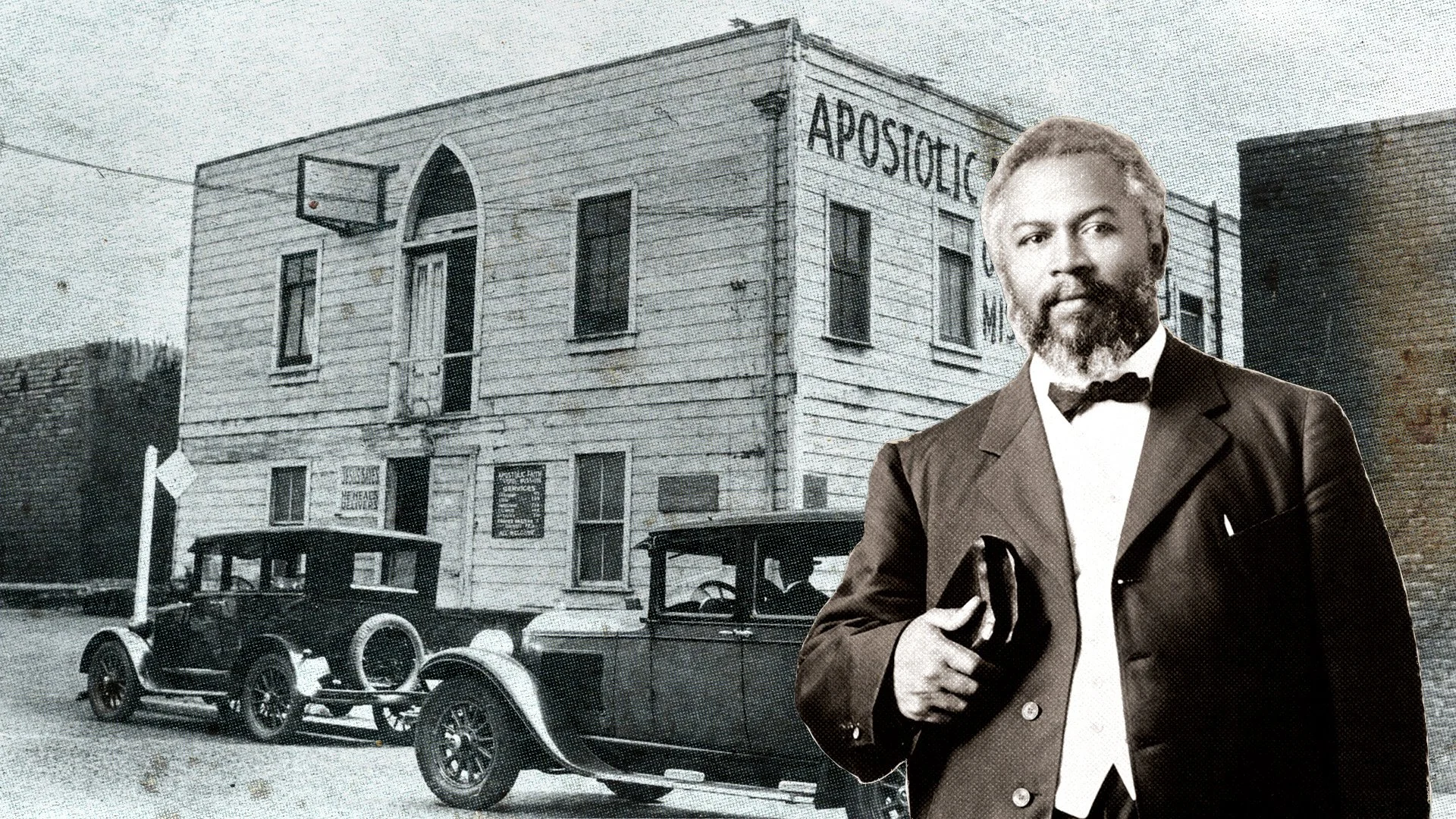
In the early days of the Azusa Street Revival (1906), something unexpected happened. The fire department showed up.
Someone had reported flames coming from the roof of a rundown building on Azusa Street in Los Angeles. Neighbors swore they saw fire. They were not wrong, but the building was not burning. Heaven had come down.
The Los Angeles Times even covered the strange events. Crowds stood outside trying to figure out what was happening inside the dilapidated former stable at 312 Azusa Street.
What they were witnessing wasn’t smoke. It was glory.
When revival touches the earth there are many wonderful events and emotions that take place in the space of visitation. For starters, there is an incessant conscious awareness of the nearness of God. God becomes the centerpiece of everyday life. You feel Him, sense Him in everything you do.
Within Christian circles we are hearing more and more about the glory of God. Why the shift? Why suddenly are Christian leaders speaking on the significance and splendor of the glory of God?
Throughout the ages people have tried to articulate what the glory of God is. It is hard to accurately define, but it is nearly impossible to forget after a person encounters it.
The Atmosphere Shifts
I have witnessed the glory of God many times during the North Georgia Revival, and every encounter has been unique and life-altering. No two moments have felt the same. Each time His presence intensifies in the room, each time He chooses to manifest His nearness, it carries weight and depth that cannot be manufactured or explained. Something shifts within us. A holy metamorphosis begins. A deeper hunger for Jesus awakens in the hearts of those present. It feels as though the entire room undergoes a baptism in His splendor and awe.
Revival has taught me that God never moves in monotone or simple black-and-white shades. His work is far more beautiful and diverse than that. Yes, His presence is simple, but it is never simplistic; there is otherworld complexity to it. Not all encounters with His glory are the same. His glory carries layers, depths, and dimensions, but every encounter with it redirects a person’s life—I know it has mine.
The Hebrew word for glory is kabod. At its core, kabod means weight, heaviness, substance. It describes not merely the beauty of God, but the gravity of His presence. When the glory of God fills a room, it is not just emotional or atmospheric—it is substantial. It presses upon the human body with holy significance, reminding us that we are standing before Someone infinitely real, infinitely holy, and infinitely worthy.
Heaven’s Nearness
The best way I can describe the glory of God is this: it feels a lot like humidity.
Here in the Deep South, Georgia in particular, we know humidity well. Down here, humidity doesn’t politely introduce itself. It doesn’t knock. It just walks in and hugs you. One step outside and your glasses fog up, your hair starts negotiating with gravity, and you suddenly understand why “sweet tea” exists in gallon containers.
You don’t have to be told humidity is present, you feel it instantly. It clings to you. It wraps around you. There are days when the air is so thick you can feel it pressing against your body. It affects you. It changes how you move, how you breathe, even how long you plan to stay outside.
This is the closest natural picture I know of what Scripture describes when the glory of God fills a place.
When Solomon dedicated the temple in 2 Chronicles 7, the glory of God filled the house so powerfully that the priests could not even stand to minister. The weight of His presence made normal activity impossible.
In the same way, when God’s glory fills a room, it becomes unmistakable, tangible, and deeply experiential. The very atmosphere seems to change. Breathing feels different. Movement becomes limited, sometimes voluntarily, as hearts bow in reverence, and some-times involuntarily, as people find themselves overwhelmed by the nearness of God.
The prophet Ezekiel tried to describe what he saw and experienced by the River Chebar:
And above the firmament over their heads was the likeness of a throne…from the appearance of His waist and upward I saw, as it were, the color of amber with the appearance of fire all around….
…Like the appearance of a rainbow in a cloud on a rainy day, so was the appearance of the brightness all around it. This was the appearance of the likeness of the glory of the Lord. So when I saw it, I fell on my face… (Ezekiel 1:26-28 NKJV).
Later, he encountered that same glory again: “…the glory of the Lord stood there, like the glory which I saw by the River Chebar; and I fell on my face” (Ezekiel 3:23 NKJV).
Notice the pattern. Every time the glory of God appears in Scripture, one common reality emerges—it becomes difficult to function as normal. Human strength gives way to holy awe. Physical capacity yields to divine presence.
Why?
Because the human heart and body are being overwhelmed by the radiance of God’s presence, the absolute perfection of untainted holiness.
When the glory comes, everything changes.
A Warning from Azusa
A few years ago, I stood at 214 North Bonnie Brae Street in Los Angeles, California. As I stood there quietly, I tried to imagine the bustling activity that once filled that modest home more than a century ago. The anticipation. The hunger. The awe. The unmistakable joy of people encountering the presence of God.
I must admit I was stricken by the moment. It was here at this very spot that a move of God was birthed, called the Azusa Street Revival. This revival stands as one of the most consequential moves of God in modern church history. What began in obscurity became the catalyst for the modern Pentecostal movement, reshaping global Christianity in a matter of months.
And like every authentic move of God, it began quietly. There were no famous preachers, charisma, or strategic plans in place. Instead, the early days were marked by the same ingredients that have birthed revivals throughout history. Humility. Brokenness. Prayer. Repentance. And a desperation for God.
Under the leadership of William J. Seymour, a humble African-American preacher, the revival became known for something almost unheard of in early 20th century America—racial unity. People from every social class, background, and ethnicity gathered together to seek God.
Inside A Crate
Eyewitnesses described Seymour frequently praying with his head inside a wooden crate, intentionally hiding his face so that no attention would fall upon him. His desire was simple: Christ alone would be exalted.
The atmosphere was said to be marked by reverence and repentance. Many fell to their knees in fear and spontaneously confessed their sins. There was a profound awareness of God’s holiness. It was raw and unpolished, but undeniably real.
When Revival Explodes
The growth of the revival was explosive and quick. As word of this revival fire spread, people began traveling from across the United States and around the world to witness what God was doing in Los Angeles. When they arrived, they were not disappointed. God met them and changed them.
As a result, numerous people were saved and baptized with the Holy Spirit. Many spoke in tongues. Others testified of miraculous healings. The atmosphere was electric with the presence of God. In addition, missionaries were sent out rapidly. Denominations were birthed, and Pentecostal theology spread globally.4 Within just a few years, the influence of Azusa Street spread across America and to nations around the world.
Historians widely agree that the modern global Pentecostal movement, which now numbers hundreds of millions of believers, traces its roots back to what happened in that house.
Something Else Was Happening
Yet beneath the outward explosion of revival, something else was taking place, something quieter and far more dangerous. The growth of the movement began to outpace the capacity of the people leading it.
Revival historian Vinson Synan wrote in his book, “As crowds increased, pressures multiplied. Competing voices emerged. Doctrinal extremes found room to grow.” Cecil M. Robeck Jr., a church historian, adds, “Personal ambition crept in where humility once governed. Racial tensions, once miraculously overcome, resurfaced. Leadership became strained under the weight of expectations that far exceeded the structure and discipleship capacity of the movement.”
What had once been a revival centered on God’s presence slowly became fragmented by controversy, competing visions, and personality conflicts. Seymour, once the unifying spiritual father of the movement, found himself marginalized. The very humility, hunger, and passion that birthed the revival was no longer universally shared among those now stewarding its influence. Something had shifted.
The Enemy’s Small Opening
This small opening was all the devil needed. The devil rarely destroys a revival in a single dramatic moment. More often, he sim-ply looks for small cracks in the foundation. His goal was to diminish the influence of the Azusa Street revival and bring it to a premature close. However, the fire did not go out instantly. But it flickered and was weakened.
What lesson(s) can we learn? The problem was not power. The problem was not a lack of God’s presence—both were present and on full display. The main issue was stewardship. In my opinion, the collapse was not due to doctrinal disputes, persecution from the outside, or the negative assessments of media and the religious com-munity. All of those things were present, but it was not as obvious as indicated; it was something hidden, more sinister, more private. The pressure came from the inside—people and personalities adding their opinion or insight as to what should happen next. This is not uncommon with moves of God, and before we become too critical, it is human nature that tries to improve what is in front of us. But revival rarely survives human control.
Frank Bartleman noted: “At the beginning of the revival the emphasis was wholly on God. Men were hidden and Christ was exalted. But gradually the Spirit was grieved, and human control began to replace divine guidance. Organization took the place of the Spirit’s leadership, and the glory that once filled the meetings began to fade. We still held the services, but the depth of the presence was not the same. The form of revival remained, but the fire that had birthed it was slowly withdrawing.”
The Real Lesson of Azusa
As with Azuza and any other move of God, there is a steep learning curve. Azusa teaches us that revival can survive outside pressure, persecution, and negative press, but it struggles to survive immaturity. When God pours out His Spirit upon a people, He does not override the human equation. Instead, He entrusts human beings with the responsibility of stewarding what He has birthed. That is a sacred and dangerous responsibility.
At Azusa, the revival advanced faster than the leaders themselves were formed. The spiritual weight placed upon them eventually exceeded their capacity to carry it.
The revival did not fail because God stopped moving. It weakened because the people carrying it were not yet fully prepared for the responsibility that came with it.
The Warning for Every Revival
In the beginning of a revival no one is fully prepared to carry it at its most weighty position. This is why maturity must grow alongside revival. The greater the outpouring, the greater the stewardship required.
History is filled with examples of revivals that began in extraordinary power but ended prematurely because the people carrying them were not prepared for the weight of what God had entrusted to them.
And that raises a sobering question for every generation: If God were to send revival today, would we be ready to carry it?