He Overdosed on Cocaine. But This Last-Minute Prayer Saved His Life
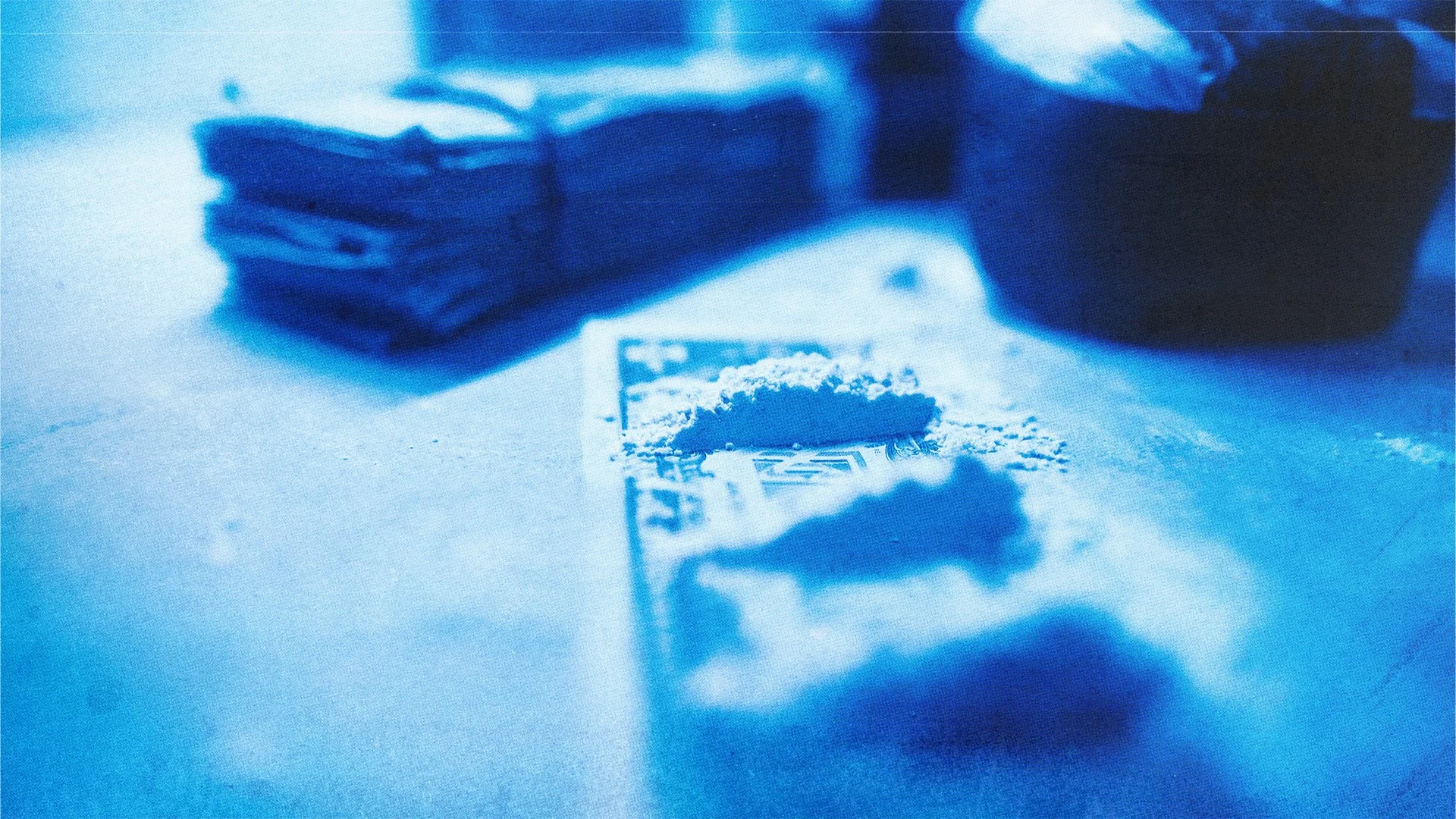
In February 1982, his party friends dropped him off at his girlfriend’s apartment.
It was past one in the morning. He was already in trouble. The elevator ride was like ascending a cliff with a loose rope; every time the doors opened, he felt his heart slam violently against his ribs. He knew something was wrong. Not just high-and-low wrong, but body-is-failing wrong.
It took him 30 minutes to get in. He didn’t have a key. By the time he reached her door and knocked, his pulse felt ragged, the way a machine sounds before it throws a belt. She let him inside, and David walked to the bedroom with the dull urgency of someone who knows time is running out but doesn’t know what to do with it.
He sat on the edge of the bed. Across from him was a sliding glass mirror—part of a closet door, catching the low apartment light. David looked at his reflection.
His skin wasn’t just pale; it was gray. He saw a color in his face that didn’t belong to the living. The sight snapped him into clarity. He realized he could not talk his way out of whatever was happening. He couldn’t muscle through it. This was beyond his drugs, beyond his connections, beyond his own will.
In that moment, David did something he hadn’t done sincerely in a long time.
He prayed.
It wasn’t elaborate. It wasn’t polished. It came up from the bot-tom of him the way a drowning man gulps air.
He asked Jesus to save him, to help him, to get him out of the situation. He promised that if Jesus did, he would never use drugs again. Never touch cocaine again. David understood, even in his panic, that this was a final bargaining table. He could see the road that had led him here, step by step, and he knew he couldn’t reroute it now unless Heaven intervened.
Then he felt his heartbeat begin to slow.
Not gradually, but in distinct, terrifying stages—slower, slower, slower. He could hear it in his ear and in his chest like a drum losing the hands that played it. He listened to the last beat and then to the sudden vacuum after it.
His eyes started closing like a camera aperture—tightening into a smaller and smaller circle. The room narrowed into a tunnel of dimming light. David didn’t remember falling back on the bed. He only remembered the moment the world folded shut.
Crossing Over
As David described it later, death wasn’t a roaring crash. It was a sudden, complete absence. But before the blackness took him fully, he saw Someone coming.
At what first seemed like a great distance—a “hallway” he couldn’t quite name—there was a Man in a white robe. On the man’s head was a cloth David mistook for a hood at first, some-thing draped over the hair and shoulders. The figure felt unmistakably familiar in a way that bypassed thought. David knew who it was before the mind caught up to the heart.
“Jesus, You came for me,” David said, stunned even in the fading of his senses.
The reply was simple, matter-of-fact, almost tender with humor.
“David, who else would be coming for you?”
David could not say how long that exchange lasted. In the strange elasticity of that realm, it might have been five minutes, it might have been ten seconds. He only knew that Jesus was there with him, speaking with him, and that a few words were said that struck him with the weight of eternity.
The key line David remembered clearly was a question Jesus asked him—one that didn’t accusatorily point backward but opened a door forward: “Do you have anything to do for Me in your future?”
David understood it as both invitation and commission. It wasn’t framed as, “You’ve ruined everything,” but as, “There is still something you can do.” The question also made something else clear to him: Jesus already knew whether David’s promise was real. There was no possibility of lying in that presence. David would later say that if he hadn’t been sincere when he begged for rescue, Jesus would have known, and “I would not be talking to you.”
After those words, the experience shifted.
Jesus vanished from his view, and the world around David col-lapsed into a total blackness. There was no fear during that phase, no images, no sound—just an overwhelming sense that he was in a holding place, perhaps the place he would have been for judgment if he were not being sent back. David couldn’t describe it fully because there was nothing visible to describe. It was like being suspended in a silent void.
Then, as abruptly as it had begun, the blackness ended. David returned to life.
Fifteen Hours Gone
When he woke, a day had passed.
David believed he had been dead for at least 15 hours. He arrived at the apartment after 1:00 a.m., and when he returned to consciousness the next day, he was stunned by time’s disappearance. He hadn’t seen the sun rise. He hadn’t even realized a day had turned. The sense of timeline rupture hit him hard: he had gone somewhere and come back, and the clock of the world had continued without him.
There was no triumphant feeling. Instead there was a raw, shaking awareness of how close he had come to dying in his sin and addiction—and how unearned his return felt.
But he noticed something else as soon as he regained his body. The craving was gone.
His addiction, which had once dictated his choices like an iron calendar, had evaporated. No withdrawal drama, no slow weaning. One moment it had owned him; the next, he was free. David attributed that freedom entirely to Jesus’ presence in his death.
Some people who survive near-death experiences wake up with a sense of confusion and hunger to interpret the mystery. David woke up with a sense of mission. He didn’t feel he’d won a second chance; he felt he’d been given a second assignment.
That same day, he acted.
He flushed what he estimated to be about $20,000 worth of cocaine down the toilet. The number wasn’t metaphorical. It was a cold accounting of what he threw away. He had made a promise in desperation the night before. Now, newly alive in the morning light, he kept it.
He also had a safe deposit box filled with more—his stash stored so he’d never be caught carrying large amounts. He went to the bank and removed it, determined that it would no longer be part of his life. He never went back to that world. By the time he recounted the story, more than four decades had passed since February 17, 1982, and he had never used cocaine again.
The shift was not subtle. It was a reversal as sharp as a knife in a road.
A Life Re-Threaded
It would be easy to imagine David’s transformation as a single moment of conversion and then smooth sailing. He never described it that way. The rescue had been instantaneous, but learning to live a different life took years.
He left Los Angeles soon afterward, needing distance from the city and connections that had fed his old self. He went north, to Northern California, staying with a friend on a Native American reservation he called the Round Valley Reservation, in a town he referred to as Covelo, about 500 miles north of Los Angeles. For a while, he lived simply. He tried to learn what it meant to follow Jesus not only in a dying moment, but in daily choices.
He also began to see evidence of God’s presence in ways he hadn’t recognized before—threads running through his past that now looked like protection.
David had grown up in Lynwood, California, near Watts, in a rough neighborhood. He told of being a five-year-old riding his bike in the 1960s in streets that could swallow a child. Looking back, he believed he should have been harmed many times. But he wasn’t.
In his NDE encounter—and in what followed—David under-stood Jesus to be telling him that He had been with David all along, guarding him through childhood even when David didn’t know it.
That realization reshaped his memory. His past wasn’t only a series of bad decisions and lucky escapes. It was also a story of the Shepherd trailing a lost boy, refusing to let go.
David’s family life had been fractured. He described it as “very dysfunctional,” with no father in the home and a mother who never told him the truth about why. That brokenness had seeded his early hunger for belonging and control. Even when he was young, he had drifted into churches asking about the Lord, but he felt dismissed, treated like a “problem” kid. He had wandered away from those doors into the drug world because, there, at least someone wanted what he offered.
Now, after the NDE, he felt that Jesus’ intervention was not only a rescue from death but recovery of a child who had been searching for God all along and had never been properly guided.
Confirmation On the Tracks
During those early years of change, David recounted another experience that strengthened his conviction that Jesus was actively leading him.
One day on the reservation, David was hitchhiking—the way people did more commonly then—and waited for hours on an on-ramp with no ride. Eventually a police officer noticed him and spoke to him. Instead of ordering him away, the cop suggested he walk to the train tracks. The town’s train station had been closed for 25 years, the officer said, but the tracks still ran south toward Los Angeles. David needed to get back, and so he started walking down the tracks.
He walked for hours—45 miles, maybe more, he estimated. Hunger and thirst gnawed at him. The landscape grew harsh, and the old instincts of survival stirred. Yet he felt the Holy Spirit with him, a quiet companionship on a lonely stretch of iron and gravel.
At some point, David heard a voice—not inside his thoughts, but outside his body, clear and directive.
“Sit down.”
He obeyed, sitting on a trestle bridge of the train tracks. Then the voice said, “Reach down with your left hand.”
David did, half bewildered, half trusting. His hand closed around something he did not expect to find on a trestle bridge miles from nowhere: a huge red apple, the biggest he’d ever seen, with two leaves still attached and water running off it like it had just been rinsed. He ate it, and it tasted like the most fulfilling meal of his life.
To David, this wasn’t about nutrition. It was about provision. It echoed the way manna had fallen in the wilderness. It said, You are not walking alone.
He kept going.
Soon after, two massive dogs—a breed he compared to bull mastiffs—charged toward him. He had no way to defend himself. But they stopped at the exact edge of their property and ran away without touching him. David didn’t understand why at the time. Later, he came to believe that Jesus had turned them away.
Still walking, he eventually reached a highway where Caltrans road workers were eating lunch by their truck. David begged them for water. They pointed to a giant thermos mounted on the vehicle and said there hadn’t been water in it for four years. It was filthy on the outside. Yet when David stuck his face under the spout, ice-cold water poured out—so much that the workers stared in shock. Inside, he said, the container looked full of shards of ice, like an iceberg. The men called it a miracle.
Then David heard another instruction from the Lord: a man would come to give him a ride.
Not long afterward, a drunk driver nearly ran him off the road. The man offered him a lift to Los Angeles but admitted he was too drunk to drive safely. David suggested he drive instead. The man agreed, happy to continue stopping at liquor stores. That, David realized, was the ride Jesus had told him would come. The trip carried him all the way back south.
These experiences were not part of his NDE. They were part of the life that followed it—signs that the One who raised him from death was also willing to shepherd his steps on highways, bridges, and impossible roads.
The Shape of the Testimony
When David told his story decades later, he didn’t linger on theological debates or try to dress his memory in ornate language. He spoke as someone who had lived two lives inside one body and had no interest in pretending otherwise.
There was the life before February 17, 1982: drugs, trafficking, self-worship, and a sense that any moral rule could be negotiated if you had enough nerve.
And there was the life after: not perfect, not free from struggle, but anchored to Jesus in a way David could only attribute to direct intervention.
David’s near-death experience was brief in description com-pared to some other testimonies. Yet its simplicity carried its own force. He had not walked through golden streets for hours. He had not toured heavenly buildings. He had not described choirs, colors, or landscapes. His story centered on two things: the moment of dying, and the moment of being found.
He was dying on a bed with gray skin and a slowing heart. He prayed a desperate prayer. Jesus came. Jesus knew him by name. Jesus asked him about his future, as if a future still existed. And then Jesus sent him back, freed him from addiction, and watched him keep his promise.
David’s narrative did not hide his former life. If anything, he emphasized his ugliness to highlight the mercy he received. He did not present himself as someone who had earned a sacred visitation. He presented himself as someone who had run out of road. “I was dead for at least fifteen hours,” he said simply. And in those hours, his life did not end. It began.
Afterward: 40-Plus Years of Fidelity
By the time David’s testimony was recorded, more than 40 years had passed since the night he almost died. He said February 17, 1982, was 42 years ago “this February,” positioning his retelling in the early 2020s. Regardless of the exact year of recording, the scale of time mattered to him. The miracle wasn’t only that Jesus brought him back once. The miracle was that Jesus kept him.
David said his life had never been the same after that day. He became a follower of Jesus. He believed Jesus stayed with him, performed other miracles for him, and continued to guide him.
If there was a theme David returned to, it was gratitude laced with willingness. He lived with the sense that his rescue came with purpose. So he carried an open-handed posture toward God: Whatever You want me to do, let me know, and I’ll do it.