After 2,000 Testimonies, One Question About Jesus and Eternity Remains

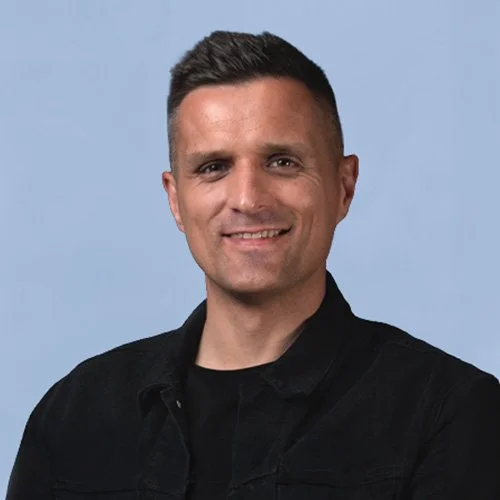
My name is Vladimir Prokhnevskiy. I am one of nine children, raised in a family where faith was not theoretical.
My father was an underground Christian minister in the former Soviet Union. Preaching the gospel in Kyiv during that time was neither safe nor welcomed. It came with real consequences. Our family lived under surveillance and pressure, learning early that following Jesus was not a cultural accessory—it was a conviction that could cost you everything.
In the year 2000, we entered the United States as persecuted Christian refugees. I learned quickly that faith could look very different in a free society than it did under persecution. But the seriousness of it—the weight of eternity—never left me.
Years later, while working in hospitals as a full-time nutrition aide during college—rotating through day shifts, nights, weekends, and holidays—that weight returned in an unexpected way.
I did not set out to collect stories, and I was not hearing them every day. But from time to time, I encountered moments—con-versations, comments, shared experiences—that pointed beyond the physical world.
Some spoke cautiously about moments they could not fully explain. Others described impressions of light, darkness, or presence during medical emergencies. Most said very little at all.
These were not sermons. They were not interpretations of Scripture. They were fragments—glimpses—enough to suggest that something more might be taking place than what medicine alone could measure.
Over time, I began to notice that similar themes surfaced again and again, quietly and without coordination. That was enough to make me wonder whether coincidence was the full explanation.
A Turning Point
One conversation marked a turning point.
A professor from Ohio State University told me about his near-death experience during a critical medical crisis. He spoke as a scientist, carefully and without embellishment. As doctors prepared his family for the possibility that he would not survive the night, he experienced leaving his hospital bed, moving through brilliant light, and finding himself in a place of profound peace. At one point, he encountered a figure who told him plainly that it was not his time—that he had another purpose.
The next day, against medical expectations, his condition reversed. He later received a heart transplant and returned to life with a quiet but unshakable awareness that existence did not end where biology failed.
He did not frame his experience as doctrine. He did not ask anyone to build theology from it. He simply told me what happened—and what it changed.
Around that same season, I encountered another story that deeply affected me: My Descent Into Hell by Howard Storm. Howard had been an atheist, a college professor with no belief in God, Heaven, or hell. His near-death experience—marked by terror, judgment, and ultimately a face-to-face encounter with Jesus Christ—led to a complete transformation of his life.
I reached out to him, not expecting a reply. He answered.
He invited me to spend a day with him.
That conversation clarified something I had been sensing for years: these stories mattered—not because they replaced Scripture, but because they echoed it. They confronted people with eternity, accountability, mercy, and grace in ways that felt deeply personal and impossible to ignore.
Not long after that, I had a dream that I have carried quietly for years.
The Dream
In it, I encountered Jesus—not as a symbol or abstraction, but as a real, authoritative presence.
He spoke to me about a calling on my life and my wife’s life, and about a work I felt unqualified to begin. He did not give me a timeline. He did not give me instructions. He simply assured me, clearly and firmly, that He would help me.
I did not act immediately.
Instead, God prepared me slowly—through years of work in ministry, media, and evangelism. I learned how stories land with people, how different voices communicate, and how testimony can reach those who might never open a Bible on their own.
When I finally began recording conversations, I did not have a master plan. I simply started listening, asking questions, and put-ting the stories out there—trusting that God would use imperfect methods to reach real people.
Since the start of my podcast, God’s Voice Today, I have inter-viewed nearly 2,000 people. Not all of them had near-death experiences. But all of them were changed by encounters they believe were real—encounters that reshaped how they understood life, death, and God.
Over time, those conversations reached far beyond a single platform. Across three channels—God’s Voice Today, God’s Voice Daily, and God’s Voice Clips—these testimonies have now been watched tens of millions of times by viewers around the world. Millions of hours have been spent listening to people describe moments that forced them to reconsider eternity, accountability, mercy, and hope.
Those numbers are not included to impress, but to establish scale. These stories are not isolated. They are being heard, weighed, questioned, and revisited by a global audience—often by people who were not looking for them at all.
Out of those conversations, a community quietly formed. Today, thousands of people from around the world are part of a free, private community called God’s Voice Family. It is a place where people share their personal encounters, wrestle with questions of faith and eternity, and gather regularly for prayer.
We meet on video calls throughout the week. Volunteers lead prayer gatherings, Bible studies, and times of encouragement. I personally lead a morning prayer call Monday through Friday. The goal is simple: not to elevate experiences, but to keep Jesus at the center and to walk together with humility, prayer, and Scripture.
For many, these testimonies are not the end of the conversation—they are the beginning.
This book is a careful selection from those testimonies.
What you will read here is not theology. It is not prophecy. It is not a replacement for Scripture. The Bible remains the final authority on truth, salvation, and eternity. These accounts are presented as personal experiences—each filtered through human memory, language, and interpretation.
Some details may challenge you. Some may comfort you.
Some may raise questions you did not expect to ask. That is intentional.
My hope is not to convince you through spectacle, nor to frighten you into belief. My hope is quieter than that—and more serious. I want you to consider eternity with clarity. I want you to see how often people describe accountability, mercy, love, and Jesus Himself when they believe they have crossed the threshold of death.
Above all, I want you to read these stories with discernment, humility, and openness.
If Heaven is real, then life is not random. If eternity is real, then our choices matter.
And if Jesus Christ truly stands at the center of it all, then listening carefully may be one of the most important things we ever do.
These are their stories. I invite you to listen.