
Is the Prosperity Gospel Heresy? What Christians Get Wrong About Prosperity

We need to be equally clear about what prosperity doesn’t mean, because the fastest way to discredit a biblical truth is to let it get twisted into something Scripture never intended.
Years ago, the Lord impressed upon my heart a principle that has guided my discernment ever since: Pay careful attention to the doctrines that are mocked, maligned, and misused, for those are often the very areas where I am moving.
If there is one doctrine that fits all three—abused by some, attacked by many, and ridiculed by the world, it is the doctrine of prosperity.
The prosperity gospel has earned its bad reputation honestly, and it’s not because the Bible doesn’t teach prosperity. It’s because some teachers have divorced prosperity from covenant responsibility, character, sacrifice, and the Cross. They’ve turned blessing into vending machine theology: insert faith, receive Mercedes. That is not the gospel. So let’s draw some hard lines.
It’s Not A Guarantee
The Bible never promises that you can be lazy, foolish, and undisciplined and still prosper. In fact, it promises the opposite:
The soul of the sluggard desireth, and hath nothing: but the soul of the diligent shall be made fat (Proverbs 13:4).
He becometh poor that dealeth with a slack hand: but the hand of the diligent maketh rich (Proverbs 10:4).
Prosperity requires stewardship. It requires wisdom; it requires work. You don’t plant corn and expect to harvest wheat. You don’t sow laziness and expect to reap abundance. God gives seed to the sower (see 2 Corinthians 9:10), but you still have to sow. You still have to cultivate. You still have to manage what He gives you with intelligence and integrity.
Never forget this: prosperity is as much a principle as it is a promise. Many misread the book of Proverbs as if it were a collection of divine guarantees, when in fact it is a compendium of divine principles.
A promise is immediate and it depends solely on the faithfulness of the One who gave it. A principle, however, requires partnership. It demands application, discipline, and endurance. A principle means that when consistently practiced over time, it produces predictable results.
That is the essence of biblical prosperity. It is not a spiritual lottery or a shortcut to wealth. It is the cumulative result of aligning one’s life with God’s covenant laws of stewardship, generosity, diligence, and faith. Those who apply these truths faithfully will, in due season, walk in the prosperity of God.
Prosperity Is Not Permission to Be Greedy
Jesus could not have been clearer: “...Take heed, and beware of covetousness: for a man’s life consisteth not in the abundance of the things which he possesseth” (Luke 12:15).
Paul warns that: “For the love of money is the root of all evil…” (1 Timothy 6:10).
James condemns the rich who hoard and oppress: “Go to now, ye rich men, weep and howl for your miseries that shall come upon you” (James 5:1).
Biblical prosperity is never about accumulation for its own sake. It’s never about luxury while your brother goes hungry. It’s never about building bigger barns so you can say: “…Soul, thou hast much goods laid up for many years; take thine ease…” (Luke 12:19).
That’s the fool’s prosperity, and God calls him a fool to his face. The biblical model is generosity. You’re blessed to be a blessing.
You’re increased so you can increase others. You receive so you can give.
The moment prosperity stops flowing and starts pooling, it becomes toxic. Stagnant water breeds disease; flowing water brings life.
Prosperity Is Not A Denial of Seasons, Suffering, or Sacrifice
Nowhere does Scripture promise that every believer will be wealthy at all times.
Paul said he knew how to abound and how to be abased (see Philippians 4:12).
Job lost everything and still blessed the name of the Lord (see Job 1:21).
Jesus had nowhere to lay His head (see Matthew 8:20).
The apostles were often in need, sometimes hungry, sometimes beaten, sometimes imprisoned (2 Corinthians 11:23-28).
Biblical prosperity doesn’t erase hardship. It doesn’t mean you’ll never go through a lean season, never face loss, never be called to sacrifice. Abraham was prosperous, but he still lived in tents. Joseph was prosperous, but he spent years in prison first. David was anointed king, but he ran for his life before he ever sat on a throne.
The prosperity promise isn’t, “You will never struggle.” It’s, “God will sustain you, supply your needs, and ultimately fulfill His purpose in your life.”
Prosperity Is Not Incompatible with Simplicity or Contentment
Paul says, “Godliness with contentment is great gain. …having food and raiment let us be therewith content” (1 Timothy 6:6,8).
Some read these verses and conclude that wanting more than food and clothing is sinful. But that’s not what Paul is saying.
Contentment isn’t the same as complacency. Contentment means you’re not anxious, not driven by greed, not measuring your worth by your net worth.
It means you trust God whether you have little or much. But contentment doesn’t mean you can’t desire increase for Kingdom purposes. It doesn’t mean you shouldn’t work toward greater capacity. It doesn’t mean ambition is sin.
Paul was content in every circumstance, yet he still worked with his hands to provide for himself and others (see Acts 20:34). He was content, yet he still took offerings for the poor in Jerusalem. He was content, yet he still told the Corinthians that God wanted to make them rich in generosity (see 2 Corinthians 9:11).
Simplicity and contentment are about posture, not poverty. They’re about freedom from materialism, not a vow of destitution.
Prosperity Is Not About Manipulating God
We’re not talking about treating the Creator of the universe like a cosmic ATM.
God is not a means to an end. He is the end. You don’t use God to get stuff. You seek God and trust Him to provide for you. There’s a massive difference between faith that trusts God’s character and presumption that tries to control God’s actions.
The Bible does teach sowing and reaping (see Galatians 6:7).
The Bible does teach that generosity produces return (see Luke 6:38).
The Bible does teach that God rewards those who diligently seek Him (see Hebrews 11:6).
But these are covenant principles, not mechanical levers. You can’t manipulate God. You can only trust and obey Him.
Prosperity Is Not at Odds with The Cross
Prosperity teaching doesn’t suggest that persecution is always avoidable. That’s not the gospel Paul preached:
“I am crucified with Christ….” (Galatians 2:20)
“…I die daily.” (1 Corinthians 15:31)
Paul counted his privileges as “dung” compared to knowing Christ (see Philippians 3:8). The Cross is central. Death to self is non-negotiable. You can’t bypass Calvary on your way to Pentecost.
But here’s what’s equally important—the resurrection follows the crucifixion. Death leads to life. The grain of wheat that falls into the ground and dies bears much fruit (see John 12:24). Jesus endured the Cross “…for the joy that was set before him…” (Hebrews 12:2).
Biblical prosperity includes the willingness to lose everything for Christ. But it also includes the promise that what you lose for His sake, you gain a hundredfold (see Mark 10:29-30). You hold everything with open hands, willing to surrender it if He asks. And ironically, it’s those open hands that God fills most freely.
The Balance Scripture Demands
Biblical prosperity walks a tightrope. On one side is the ditch of greed, materialism, and self-indulgence. On the other side is the ditch of false humility, poverty piety, and economic fatalism. Scripture calls us to walk the narrow road between them.
That road includes work and rest, giving and receiving, faith and wisdom, ambition and contentment, abundance and sacrifice. It’s held in tension by the Spirit, governed by the Word, expressed in love.
When we keep these guardrails in place, prosperity stops being a stumbling block.
The Illusion of Prosperity
Picture this, a banker in a three-piece suit strutting down Wall Street, Italian leather shoes clicking against the pavement, gold Rolex catching the sunlight, briefcase full of contracts worth millions. Now picture a tribesman walking across the sun-scorched African plains, barefoot, wearing nothing but a loincloth and a wide-brimmed straw hat, carrying a walking stick and a gourd of water.
To our modern eyes, it’s obvious who’s prosperous, right? The banker has everything. The tribesman? He’s barely surviving. Let’s flip the script. Drop that same banker in the middle of the Sahara at high noon: no Starbucks, no air-conditioned office, no Uber coming to save him.
Suddenly that tailored suit becomes a death trap, soaking him in sweat. Those polished shoes? Useless torture devices on burning sand. That gold watch? Can’t buy him a single drop of water. Within hours, he’s desperate, dehydrated, dying, and everything he thought made him rich is worthless.
Meanwhile, the tribesman, the one we pitied moments ago, looks like a billionaire. That straw hat is a portable oasis. His tough feet in those sandals know how to walk on fire. His simple gourd is worth more than the banker’s entire stock portfolio. In this environment, he’s the wealthy one. His knowledge, his tools, his wisdom—all perfectly suited for his world.
Prosperity isn’t about appearance or possessions. It’s about having what you actually need when you actually need it and having more than enough. It’s about adaptability. It’s about wisdom.
Prosperity Isn’t Automatic
At this point, someone might ask, “Okay, if God wants to prosper His people, how does it actually happen? Is it automatic? Do I just wake up one day and find abundance in my bank account?”
The answer is no. Biblical prosperity isn’t automatic, and it’s not predetermined in a way that bypasses human responsibility. It’s not fatalistic—“if it’s God’s will, it’ll happen no matter what I do.”
That’s not how covenant works. That’s not how any of God’s promises work.
Think about marriage. God’s will is for marriages to thrive, for husbands and wives to experience love, unity, and fruitfulness. But a good marriage doesn’t just happen because you said, “I do.”
There are principles. There are patterns. There are ways to tap into what God designed for your marriage: communication, sacrifice, forgiveness, intimacy, commitment. You have to learn them. You have to practice them. You have to steward the relationship.
Prosperity works the same way. There are biblical mechanisms. There are Kingdom principles. There are ways to position yourself under God’s blessing and ways to block it. Wisdom matters. Diligence matters. Generosity matters. Obedience matters. Stewardship matters.
Scripture gives us examples throughout:
Joseph’s administrative genius in Egypt.
Bezalel’s creative skill in building the tabernacle.
The Proverbs 31 woman’s business acumen.
Lydia’s trade network in Philippi.
These weren’t people sitting around waiting for manna to fall. These were people who combined faith with action, who stewarded gifts and opportunities, who sowed and reaped according to God’s design.
We’re going to unpack all of this in detail later in the book including the practical mechanisms of biblical prosperity, the principles of sowing and reaping, the role of wisdom and work, the power of generosity, the importance of aligning yourself with God’s purposes. This chapter is about establishing the foundation: prosperity is biblical. The chapters that follow will show you how to walk in it and to address other unanswered questions.
Now, just understand that prosperity is a covenant capacity that you steward, not a lottery ticket that you wait on.
God gives you the power to get wealth (see Deuteronomy 8:18), but you still have to get it. He supplies seed to the sower (see 2 Corinthians 9:10), but you still have to sow. He opens doors, but you still have to walk through them.
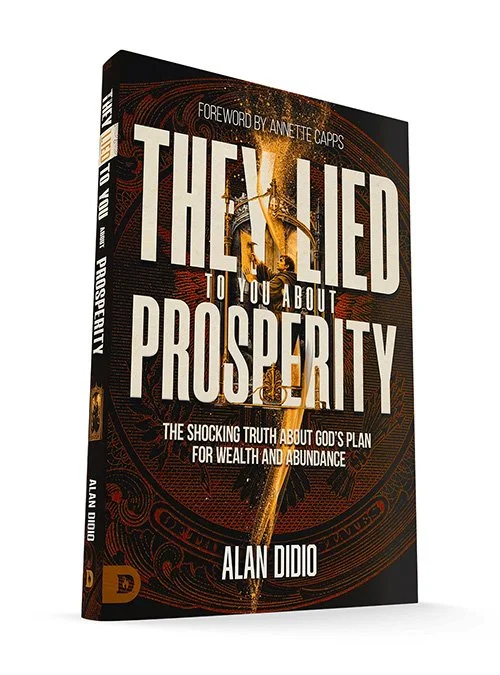
Break Free from Poverty Thinking and Step Into God's Abundant Plan.
Have you been taught that wanting prosperity is unspiritual? Have you quietly felt guilty for desiring financial stability, overflow, or success? Do you wonder whether God truly delights in blessing His people--or merely tolerates it?
You're not alone. For generations, believers have been conditioned to distrust abundance, to spiritualize lack, and to apologize for blessing. But what if the real deception isn't prosperity... but the propaganda against it?
In this bold and Scripture-saturated work, a seasoned pastor with over twenty years of ministry experience confronts the lies head-on. After repenting publicly for avoiding the subject out of fear, he began a deep biblical exploration that transformed his church--and unleashed undeniable fruit. This breakthrough resource reveals what the Bible actually says about wealth, stewardship, blessing, and the spiritual war surrounding them.
As you turn these pages, you'll discover how to:
Overcome guilt, shame, and fear surrounding money and success
Declare God's promises of provision with confidence and consistency
Steward abundance for generosity, missions, and Kingdom advancement
Walk in both prosperity and humility without compromise
Break agreement with poverty theology and renew your mind with Scripture
The enemy thrives on silence and intimidation--but Scripture is clear: God takes pleasure in the prosperity of His servants. The same gospel that saves your soul can redeem your finances. The same Jesus who forgives sin can break the bondage of lack. Your Father is not glorified by your perpetual struggle. He is glorified when you steward blessing for His purposes.